5/8/2026
Data ScienceData Science Course After Graduation: Smart Career Move in 2026
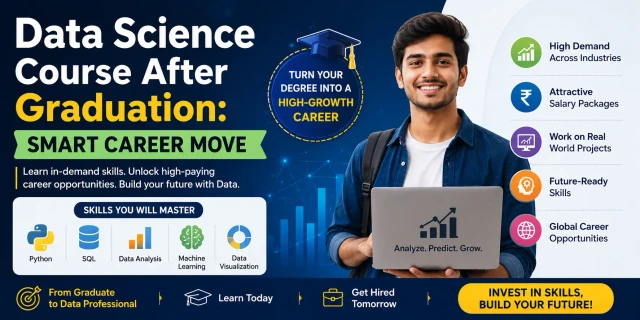
Table of contents
Table of Contents
- Quick Answer
- Why Choose a Data Science Course After Graduation?
- What Is Data Science and Why Is It Growing?
- Why Graduates Are Choosing Data Science in 2026
- Data Science After BSc, BCA, and BCom
- Data Science Course Eligibility After Graduation
- Skills You Learn in a Data Science Course
- Best Data Science Courses After Graduation
- Step-by-Step Guide to Start Data Science After Graduation
- Real Example: How One Graduate Switched Careers
- Salary and Career Opportunities in India
- FAQs
- Final Thoughts
Quick Answer:
A data science course after graduation helps students build in-demand skills like data analysis, Python, machine learning, and business analytics. Graduates from BSc, BCA, BCom, and other streams can enter high-growth careers with strong salary potential and opportunities across industries in India and abroad.
Why Choose a Data Science Course After Graduation?
A data science course after graduation can open doors to high-paying careers in analytics, AI, machine learning, business intelligence, and technology. Companies today rely heavily on data to make decisions, which is why skilled data professionals are in demand across industries like finance, healthcare, e-commerce, marketing, and startups.
For graduates who feel confused about career direction after college, data science offers a practical path with strong job growth, good salaries, and opportunities in both India and global markets.
What Is Data Science and Why Is It Growing?
Data science is the process of collecting, analyzing, and interpreting data to solve business problems and make smarter decisions.
Sounds technical?
It is.
But it’s also extremely practical.
When Netflix recommends shows, Amazon predicts products, or Swiggy estimates delivery time, data science is working behind the scenes.
Businesses Depend on Data More Than Ever
Companies don’t want guesswork anymore.
They want:
- Customer insights
- Sales forecasting
- Market predictions
- Better advertising performance
- Smarter business decisions
That’s why data science professionals are becoming valuable across industries.
According to the World Economic Forum, data-related jobs remain among the fastest-growing career categories globally.
India’s Data Industry Is Expanding Rapidly
India has become a major tech and analytics hub.
Startups, fintech companies, edtech brands, and D2C businesses are hiring analysts and data professionals aggressively.
According to NASSCOM reports, India’s analytics market continues to grow strongly because businesses are adopting AI and automation faster than before.
This demand is one reason why students are increasingly looking for the best data science course 2026 India.
Why Graduates Are Choosing Data Science in 2026
Many graduates realize something after college.
A degree alone often isn’t enough anymore.
Recruiters now focus heavily on practical skills.
That’s where data science stands out.
High Salary Potential
Data science roles often offer better starting salaries than many traditional jobs.
Entry-level roles in India can range between ₹4–8 LPA depending on:
- Skills
- Internship experience
- Portfolio projects
- Course quality
Experienced professionals can earn significantly more.
Strong Demand Across Industries
One interesting thing about data science is that it’s not limited to tech companies.
Industries hiring data professionals include:
- Banking
- E-commerce
- Healthcare
- Sports analytics
- Digital marketing
- Logistics
- Education
That flexibility makes it attractive for graduates.
Remote Work Opportunities
Many data-related roles also support remote work.
For students in Tier-2 and Tier-3 Indian cities, this creates better career access without relocating immediately. machine learning course
Better Career Stability
Automation is replacing repetitive jobs.
But people who understand data, AI, and analytics are becoming more valuable.
That’s a major reason graduates are investing in future-ready skills.
Data Science After BSc, BCA, and BCom
A common misconception is that only engineering students can learn data science.
That’s completely false.
Data Science After BSc
Students from BSc backgrounds often adapt quickly because they already understand:
- Mathematics
- Statistics
- Analytical thinking
BSc graduates in math, computer science, physics, or statistics usually have a strong foundation.
Data Science After BCA
BCA students already know basic programming concepts.
That makes learning:
- Python
- SQL
- Machine learning
much easier.
In fact, many successful junior data analysts come from BCA backgrounds today.
Data Science After BCom
This surprises many people.
But data science after BCom is becoming increasingly popular.
Why?
Because businesses need professionals who understand both:
- Business operations
- Data analysis
BCom graduates often perform well in:
- Business analytics
- Financial analytics
- Excel-based reporting
- Data visualization roles
They may need extra support in coding initially, but it’s absolutely achievable.
Data Science Course Eligibility After Graduation Explained
Eligibility varies depending on the institute and course type.
But most programs accept graduates from multiple streams.
Common Eligibility Criteria
Most institutes require:
- Graduation from a recognized university
- Basic computer knowledge
- Interest in analytics and problem-solving
Some advanced programs may prefer:
- Mathematics background
- Programming familiarity
But many beginner-friendly courses teach fundamentals from scratch.
Do You Need Coding Experience?
Not always.
Many beginner programs start with:
- Python basics
- SQL fundamentals
- Data handling
The bigger factor is consistency and willingness to learn.
We’ve seen students from non-tech backgrounds succeed because they practiced regularly.
Skills You Learn in a Data Science Course
A good course teaches much more than theory.
Core Skills Usually Covered
Skill
Why It Matters
Python
Data analysis & automation
SQL
Database management
Excel
Business reporting
Machine Learning
Prediction models
Statistics
Data interpretation
Power BI/Tableau
Visualization
Data Cleaning
Real-world analysis
Business Analytics
Decision-making
Projects Matter More Than Certificates
This is something many students discover late.
Recruiters care more about:
- Practical projects
- Portfolios
- Internships
- Problem-solving ability
A certificate alone won’t guarantee a job.
Hands-on practice matters far more.
What to Look for in a Best Data Science Courses After Graduation
Industry-Relevant Curriculum
The course should include:
- Python
- SQL
- Machine learning
- Visualization tools
- Real projects
Avoid outdated syllabi.
Placement Support
Good institutes provide:
- Resume help
- Mock interviews
- Internship opportunities
- Job assistance
Real Projects and Case Studies
Learning becomes easier when students work on practical datasets.
This also strengthens portfolios.
Flexible Learning Options
Many students today prefer:
- Hybrid learning
- Weekend batches
- Online live classes
Especially working professionals.
That’s why the demand for the python and data science keeps increasing.
Step-by-Step Guide to Start Data Science After Graduation
Starting can feel overwhelming initially.
Here’s a practical roadmap.
Step 1: Understand the Career Paths
Data science includes multiple roles:
- Data Analyst
- Business Analyst
- Machine Learning Engineer
- Data Engineer
Research them before choosing.
Expected Outcome:
Clearer career direction.
Step 2: Learn Basic Python and SQL
These are foundational skills.
Start small.
Don’t rush into advanced AI immediately.
Expected Outcome:
Better technical confidence.
Step 3: Join a Structured Course
A proper course provides:
- Guidance
- Curriculum
- Projects
- Mentorship
Expected Outcome:
Faster and more organized learning.
Step 4: Build Projects
Create:
- Dashboards
- Prediction models
- Data reports
Projects help you stand out during interviews.
Expected Outcome:
Stronger portfolio.
Step 5: Apply for Internships
Even small internships matter initially.
Real-world exposure builds confidence quickly.
Expected Outcome:
Practical industry experience.
Real Example: How One Graduate Switched Careers
Ritika completed her BCom degree in Delhi but struggled to find high-growth career opportunities.
She initially believed data science was only for engineers.
After joining a beginner-friendly analytics program, she learned:
- Excel
- SQL
- Power BI
- Basic Python
Within eight months, she secured a junior business analyst role at a startup with a ₹5.2 LPA package.
Her biggest advantage?
She combined business understanding with analytical skills.NIELIT Data Science and Analytics course
This is becoming increasingly common across India.
Salary and Career Opportunities in India
Popular Roles After a Data Science Course
Job Role
Average Entry Salary (India)
Data Analyst
₹4–6 LPA
Business Analyst
₹5–8 LPA
Junior Data Scientist
₹6–10 LPA
Machine Learning Engineer
₹8–12 LPA
BI Analyst
₹5–7 LPA
Salaries depend on:
- Skill level
- City
- Projects
- Communication skills
- Internship experience
Top Hiring Sectors
Companies hiring data professionals include:
- Startups
- Fintech companies
- E-commerce brands
- Consulting firms
- SaaS businesses
- Healthcare companies
Even digital marketing agencies now use analytics heavily.
FAQs
Can I do a data science course after graduation?
Yes. Graduates from BSc, BCA, BCom, engineering, and many other streams can pursue data science courses. Most beginner-level programs teach fundamentals from scratch and focus on practical industry skills.
Which is the best data science course after graduation?
The best course depends on your goals, budget, and background. Look for programs that include Python, SQL, machine learning, projects, and placement support rather than focusing only on certificates.
Can BCom students learn data science?
Absolutely. Many BCom graduates successfully transition into business analytics and data analysis roles. Their understanding of finance and business operations becomes a strong advantage in analytics-based careers.
Is coding compulsory for data science?
Basic coding knowledge is important, especially Python and SQL. However, many beginner-friendly courses teach coding fundamentals gradually, so prior experience is not always necessary.
What is the eligibility for a data science course after graduation?
Most institutes require a bachelor’s degree from a recognized university. Some advanced programs may prefer mathematics or programming knowledge, but many courses accept students from all academic backgrounds.
How long does it take to learn data science?
Basic job-ready skills usually take 6–12 months depending on course quality, practice consistency, and learning pace. Continuous project-building improves skills much faster.
What salary can freshers expect in data science?
Freshers in India can typically earn between ₹4–8 LPA depending on skills, internships, projects, and communication ability. Specialized roles may offer higher salaries.
Is data science a good career in India in 2026?
Yes. Demand for data professionals continues growing across industries like fintech, healthcare, e-commerce, AI, and digital marketing. Data science remains one of the strongest future-focused career options in India.
Final Thoughts
Choosing a C-DAC Data Science courses can be a smart decision for students looking for strong career growth, practical skills, and future-ready opportunities. Whether you come from BSc, BCA, BCom, or another background, data science offers flexible career paths across multiple industries.
The key is choosing the right course, building real projects, and staying consistent with practice. The students who succeed aren’t always the most technical initially — they’re usually the ones who keep learning steadily.
If you want guidance on digital skills, career-focused learning, or industry-ready training insights, our team at DigitalAdda Agency can help you explore smarter growth opportunities.
About the Author
Quick facts
Name: Shagun
From: Delhi
Education: B.Tech
Program: Data Science and Data Analytics
Placed in: NIDADS (National Institute of Data Analytics & Data Science)
Covers topics: Data Science, Data Analytics, Artificial Intelligence, Machine Learning, Data Engineering, Deep Learning
Currently working as: Senior Data Science Trainer
In her words: "The best way to learn data science isn't just solving problems — it's understanding why the solution works. That's what I try to teach every single day."